
Blog
Product news, curation notes, and guides for getting the most out of MyGemAi.

Elicit vs Consensus: Search, Screen, and Verify Evidence
Compare Elicit and Consensus for literature search, paper screening, evidence extraction, and citation checks, with a practical workflow you review and reuse.
Read more →
Jasper vs Copy.ai: Brand Inputs, Review and GTM Workflows
Compare Jasper vs Copy.ai for brand inputs, reusable content workflows, saved revisions, review, and handoff. Use one launch brief to check facts and ownership.
Read more →
Grammarly vs QuillBot: Edit Tone Without Changing Meaning
Compare Grammarly vs QuillBot for grammar, tone and paragraph rewriting, with sample email edits and checks for meaning, language support, accounts and export.
Read more →
Suno vs Udio: Song Revisions, Stems and Download Limits
Compare Suno vs Udio for song prompts, lyrics, section edits, stems, and sharing. Check current download limits before planning a DAW or video-editing handoff.
Read more →
Notion AI vs ClickUp Brain: Search, Docs and Task Actions
Compare Notion AI vs ClickUp Brain for workspace search, Docs and real task actions. Check source freshness, assignees, dates, connectors and agent permissions.
Read more →
Runway vs Pika: Image-to-Video Control and Shot Revisions
Compare Runway vs Pika for image-to-video shots, motion prompts, keyframes, targeted revisions, and exports, with a concrete brief and frame-review checklist.
Read more →
Surfer SEO vs Frase: Content Briefs and Editing Compared
Compare Surfer SEO vs Frase for content briefs, SERP research and article updates, with a sample brief, suggestion review and checks for editorial approval.
Read more →
Descript vs CapCut: Text Editing, Captions and Video Export
Compare Descript vs CapCut for interview edits, transcript fixes, captions, vertical crops, and exports. Follow a sample cut from raw footage to final review.
Read more →
Chatbase vs Tidio: AI Support, Actions and Human Handoff
Compare Chatbase vs Tidio Lyro for website AI support, knowledge updates, actions, and human handoff. Use a shared return-policy test to check the workflow.
Read more →
Ollama vs LM Studio: Local Models, Memory and API Compared
Compare Ollama vs LM Studio for local models, memory, offline AI and API compatibility, with a small-model setup trial and checks for local network boundaries.
Read more →
Teal vs Kickresume: AI Resume Tailoring and Export Compared
Compare Teal vs Kickresume for resume tailoring, job-description matching, AI edits and PDF exports. Use a short trial to check facts, versions and final files.
Read more →
ElevenLabs vs Murf: AI Voiceovers, Pronunciation and Export
Compare ElevenLabs vs Murf for AI voiceovers, pronunciation fixes, video timing, revisions, and exports, with a shared script and practical acceptance checks.
Read more →
Lovable vs Bolt: Code Export, Databases and App Deployment
Compare Lovable vs Bolt for code export, database migration, GitHub sync and app deployment, with a demo brief and a practical developer handoff checklist.
Read more →
HeyGen vs Synthesia: Avatars, Dubbing and Video Translation
Compare HeyGen vs Synthesia for AI avatars, video dubbing, editable scene translation, and team reviews. Use one trial brief to check the delivery workflow.
Read more →
n8n vs Make: AI Automation Costs, Hosting and Maintenance
Compare n8n vs Make for AI automation: hosting, workflow executions, credits, model costs, and retries. Budget a sample workflow before choosing a platform.
Read more →
Gamma vs Canva: AI Slides and PowerPoint Export Compared
Compare Gamma vs Canva for AI presentations, editable PowerPoint exports, brand templates, and team handoffs, with a practical deck brief and export checklist.
Read more →
AI Meeting Note Takers: Compare Capture and Follow-Up Tools
Compare Otter, Fireflies, Fathom, Granola, and tl;dv by capture mode, playback, and follow-up workflow. Use a repeatable trial to choose the right meeting tool.
Read more →
NotebookLM vs Perplexity: Choosing an AI Research Workflow
Compare NotebookLM, now Gemini Notebook, with Perplexity for document analysis, web research, citations, and a repeatable workflow for checking source evidence.
Read more →AI Adoption by Profession: What Google ATLAS Reveals in 2026
Google ATLAS reveals sharp differences in AI use by profession and country. Learn how to turn the data into task-level pilots, metrics, and controls.
Read more →Google Sheets Canvas Guide: Build AI Mini-Apps from Your Data
A practical guide to Google Sheets Canvas: build synchronized mini-apps from spreadsheet data, test write actions, manage permissions, and automate safely.
Read more →ChatGPT Ads Guide: Sponsored Agents and AI Campaign Workflows
A practical guide to ChatGPT ads, including Sponsored Agents, conversational campaign management, creative workflows, privacy, and measurement.
Read more →GPT-Live-1 Voice Agents: A Practical Real-Time AI Guide for 2026
Learn how GPT-Live-1 changes real-time voice agents, from natural turn-taking and interruptions to backend delegation, cost, and production safeguards.
Read more →OpenAI Agents API Guide: Build Production AI Agents in 2026
A practical guide to OpenAI’s Agents API, including architecture, tools, sandboxes, multi-agent patterns, costs, security, and migration decisions.
Read more →
AI Image Generator Free Online: 7 Browser Tools You Can Try in 2026
Compare seven free online AI image generators, including no-sign-up tools and services that give new accounts free credits, limits, and usage rights clearly.
Read more →Gemini 3.8 Flash News: What Google’s New Model Card Tells Developers
Google DeepMind's Gemini 3.8 Flash model card covers effort controls, agent workflows, freshness limits and production testing.
Read more →Microsoft Responsible AI News: Governance for Agentic Systems in 2026
Microsoft's 2026 responsible AI update explains adaptive governance, permissions, monitoring and lifecycle controls for agents.
Read more →Claude Fable 5.1 News: What Anthropic Announced This Week
Anthropic introduced Claude Fable 5.1 and Mythos 5.1 for coding, knowledge work and research.
Read more →OpenAI Automated AI Researcher: What the September 2026 Update Means
OpenAI reports an automated research intern milestone. Here is what supervised research automation can and cannot prove.
Read more →GPT-6 Astra AI News: What the September 2026 Release Changes
GPT-6 Astra combines computer use, coding, research and cybersecurity in a staged September 2026 release.
Read more →2026 AI Tools Directory Snapshot: What 587 Listings Reveal
A transparent snapshot of 587 MyGemAi AI tool listings, including category concentration, pricing models, methodology, limitations, and practical filtering guidance.
Read more →Google AI Mode SEO Guide: How to Create Content People Can Verify
Learn a source-first Google AI Mode SEO workflow: structure answers, verify claims, improve click value, and avoid unsupported optimization promises.
Read more →Claude Code vs Cursor: Which AI Coding Workflow Should You Choose?
Compare Claude Code and Cursor by terminal or editor workflow, review controls, automation, cost testing, and safe practices before your team adopts either.
Read more →Nano Banana Pro vs ChatGPT Images: A Practical 2026 Workflow Guide
Compare Nano Banana Pro and ChatGPT Images by workflow, editing, text handling, and review needs so you can choose the right AI image tool for your team.
Read more →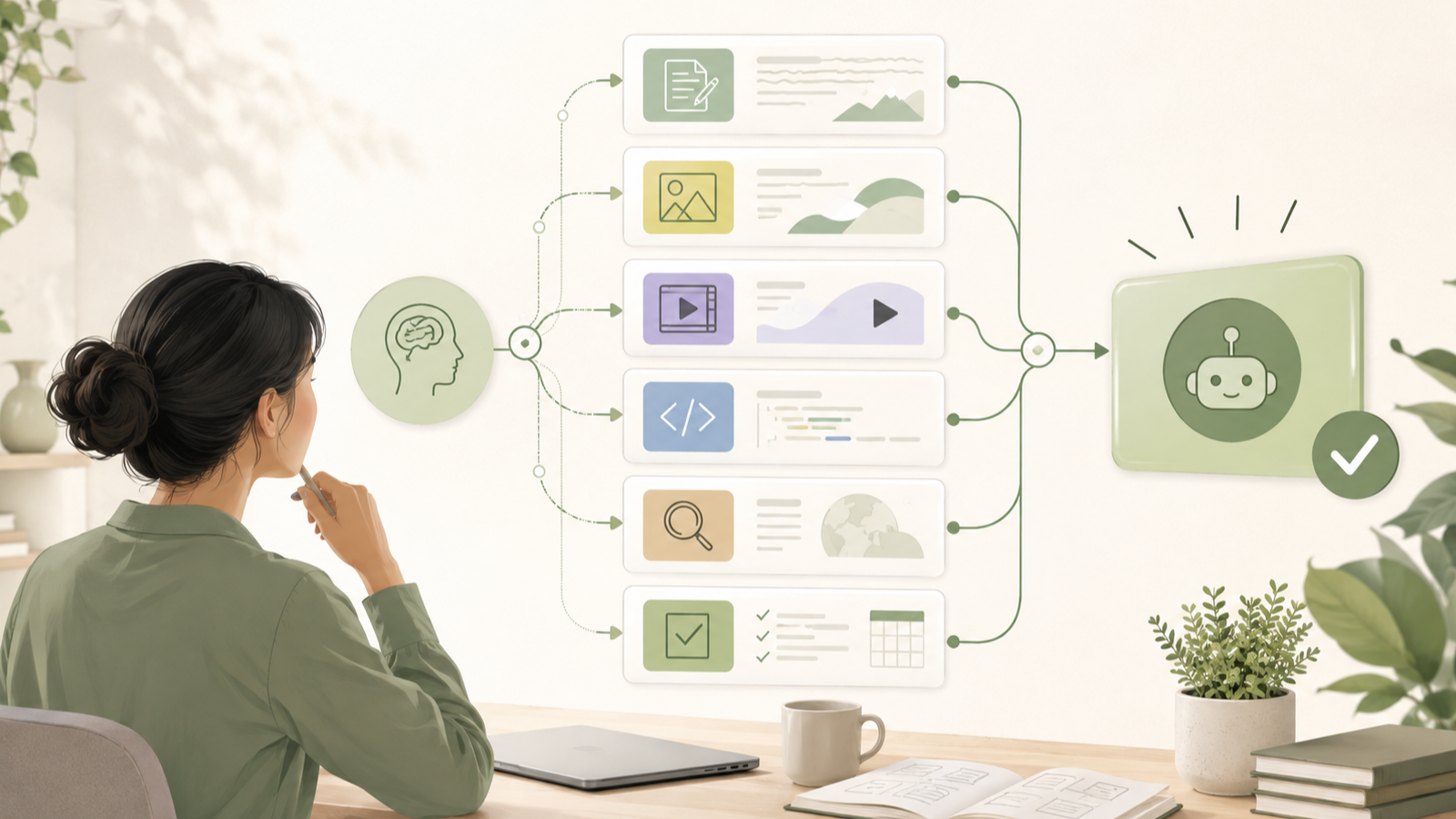
How to Navigate 500+ AI Tools: Filter by Workflow, Pricing, and Time to Value
Not sure where to begin with an AI tools directory? This practical, repeatable method starts with the job to be done, then checks inputs and outputs, the scope of free access, onboarding effort, and the need for human review. Compare options by writing, design, audio and video, development, and research workflows to reduce unproductive trials, find tools that fit your existing process, and turn every evaluation into a reusable decision record.
Read more →Best AI Writing Tools in 2026: How to Choose for Drafting and Editing
Compare AI writing tools for brainstorming, drafting, document work, editing and proofreading with a test focused on revision, source checks and workflow fit.
Read more →AI Image Generators in 2026: A Practical Guide to Choosing Tools Well
Choose AI image generators by task: exploration, typography, production, fast iteration or local control. Test one brief, repeatability and the review effort.
Read more →How to Choose AI Tools in 2026: A Practical Workflow Starter Guide
Choose AI tools by recurring work, then test drafting, research, image and coding workflows for fit, review effort, costs and team handoffs before committing.
Read more →